Ski Resort Padding Maintenance: A Preseason Checklist for Safer Slopes
Ski Resort Padding Maintenance: A Preseason Checklist for Safer Slopes
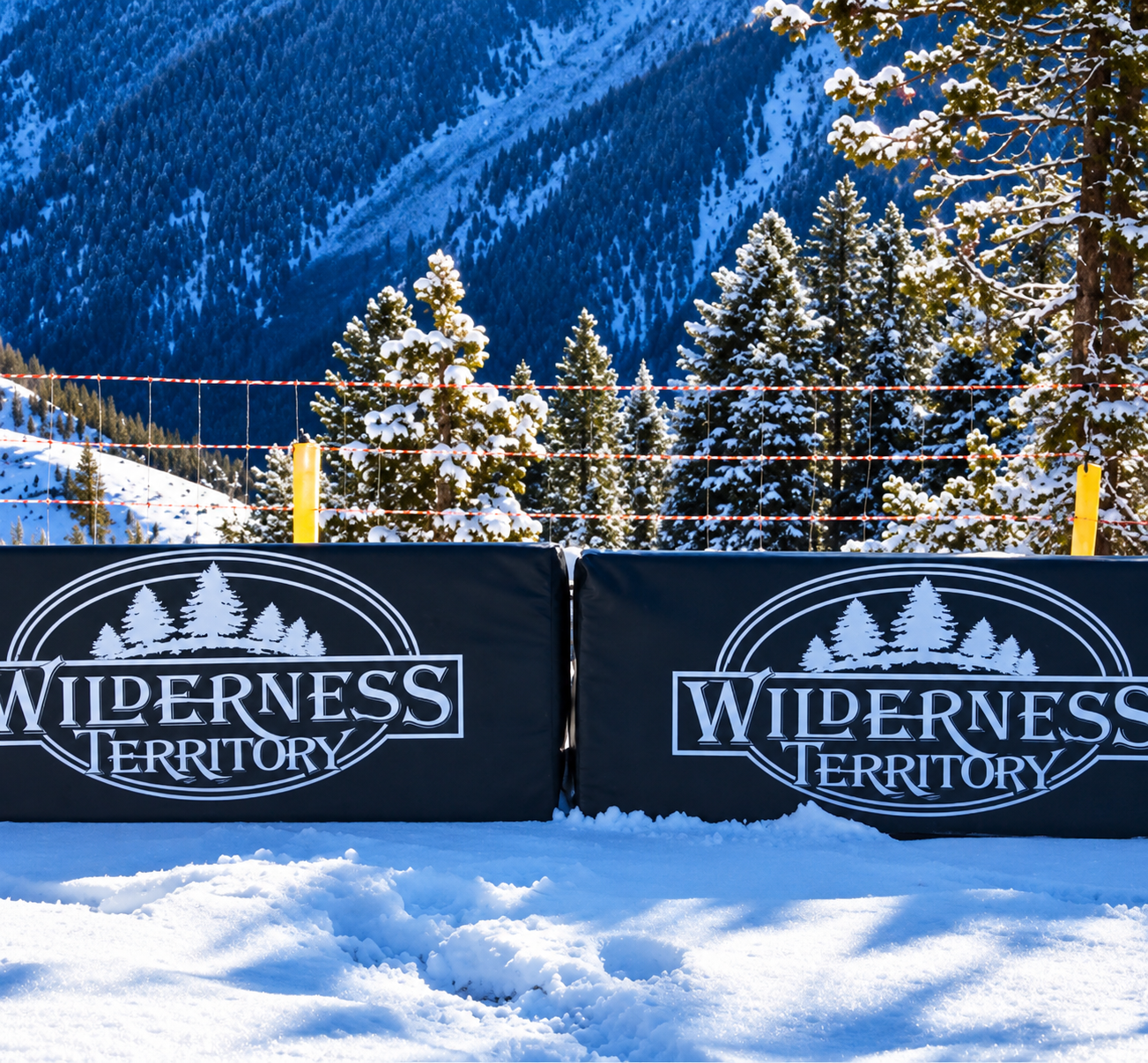
The preseason is the right time to inspect every piece of ski area padding on your mountain. Once the first snowfall arrives, access becomes difficult, schedules tighten, and a damaged pad can turn into an avoidable lift closure, maintenance delay, or guest incident.
A thorough inspection should cover lift tower pads, hydrant padding, pole padding, chairlift pads, finish-line barriers, and other custom foam padding installed around high-traffic areas. The goal is straightforward: identify wear before winter operations begin and repair or replace equipment before it becomes a problem.
Idaho Sewing for Sports has more than 50 years of experience manufacturing custom padding for ski areas. Our products are made in the USA with heavy-duty UV-resistant vinyl, closed-cell high-density foam, reinforced seams, and hardware designed for demanding mountain conditions. We serve more than 600 ski areas worldwide, including facilities in 37 states and 8 countries.
Use the following checklist during your preseason mountain walk-through.
1. Confirm Your Padding Inventory and Locations
Before inspecting individual pads, confirm that your inventory matches your current mountain layout.
Ski areas change from season to season. Lift alignments, snowmaking infrastructure, terrain park features, signage, and trail routing may all be different. A pad that was correctly positioned last season may no longer cover the right impact area.
Review the following:
Lift tower and lift line pole locations.
Snowmaking hydrants, valves, hose connections, and tower guns.
Signposts, fence posts, gates, and terrain park structures.
Race-course finish lines and barrier systems.
Chairlift seat pads and conveyor or lift covers.
Any custom equipment added during the off-season.
Create or update a trail-by-trail padding map. Record the pad type, location, dimensions, installation hardware, and condition. A simple rating system works well: By sharing this information with us we can help you plan for future seasons.
Good: Ready for installation.
Marginal: Usable after minor repair or hardware replacement.
Replace: Not suitable for another winter season.
This documentation helps maintenance teams stage equipment efficiently and identify shortages before the mountain opens.
2. Inspect Lift Tower Pads
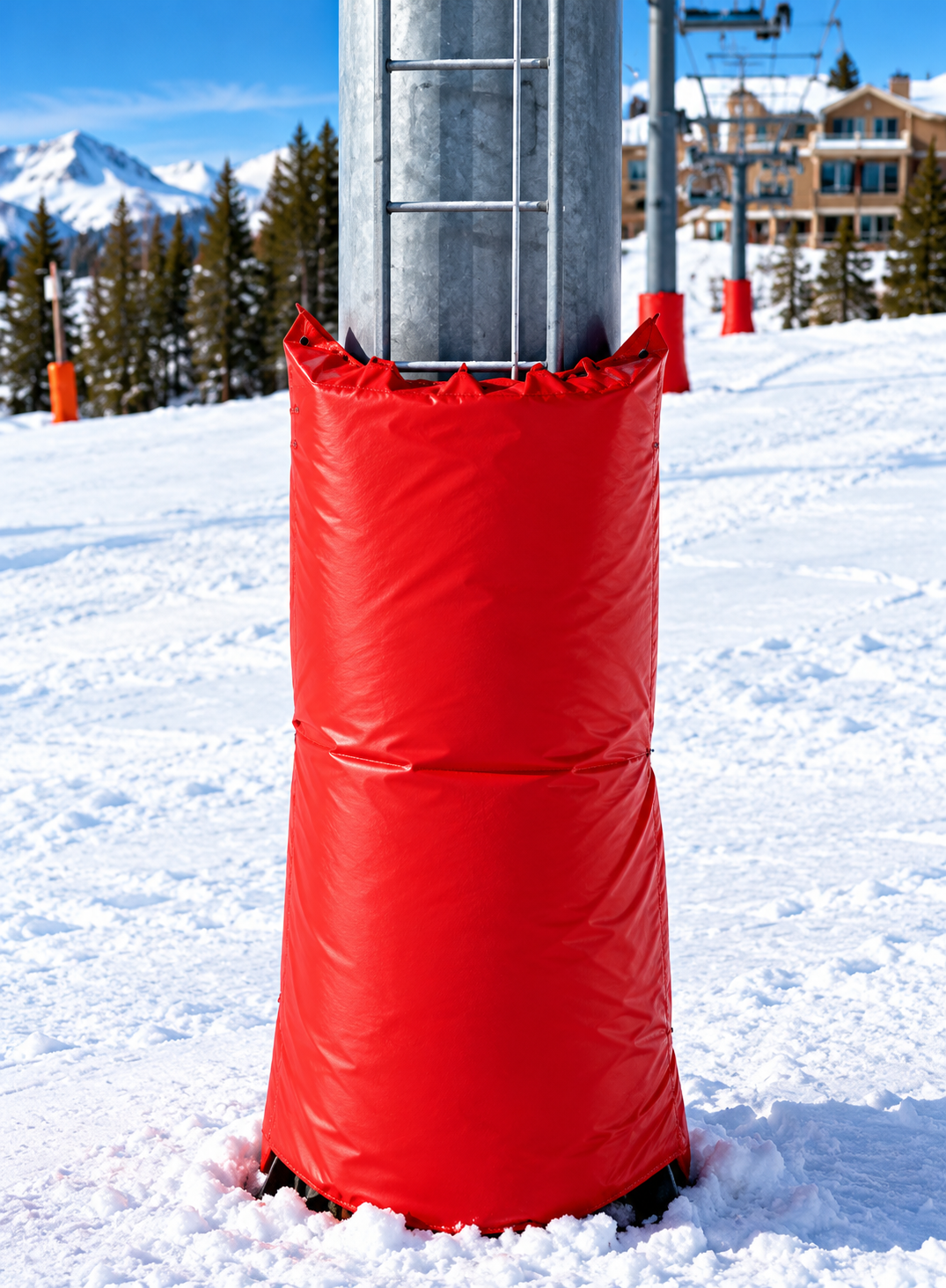
Lift tower pads operate in one of the harshest environments on the mountain. They face direct sun, wind, snow, ice, abrasion, freeze-thaw cycles, and repeated contact with skis and equipment.
Inspect every lift tower pad for the following conditions:
Check the vinyl cover
Look for:
Severe fading or uneven discoloration.
Chalking or a powdery surface.
Brittle areas that no longer flex.
Cracks at corners, folds, and attachment points.
Tears, punctures, or exposed foam.
Abrasion caused by tower hardware or snow-grooming equipment.
Faded vinyl is not automatically a reason to discard a pad. However, severe fading combined with stiffness, cracking, or surface chalking indicates that the material may have lost flexibility. A cover that feels thin, crispy, or brittle should be removed from service.
Check the foam core
Press and inspect the foam through the cover. Watch for:
Flat or permanently compressed sections.
Gaps between the foam and the tower.
Lumps, voids, or shifted material.
Foam that does not return to its original shape.
Crumbling, powdering, or exposed foam.
A compressed foam core may no longer provide the intended cushioning across the full contact area. If the core has lost its shape, replacing only the cover will not solve the problem.
Check the attachment system
Inspect straps, buckles, hook-and-loop closures, and reinforced seams. Hardware should hold the pad firmly in place without excessive movement.
Replace or repair components that are:
Cracked or corroded.
Stretched beyond proper adjustment.
Cut or frayed.
Damaged by UV exposure.
Unable to maintain tension.
Pads must fit snugly around the tower. Loose padding can rotate, slide, or expose unpadded sections during the season.
Idaho Sewing for Sports tower pads use 18-ounce UV-resistant vinyl, cold-crack rated to –40°F, reinforced seams, and heavy-duty buckles. These specifications are designed for mountain conditions where ordinary fabric and low-grade foam fail quickly.
3. Examine Hydrant Padding and Snowmaking Covers
Snowmaking hydrants create several maintenance challenges. They are exposed to weather, frequently accessed by operations crews, and located in areas where skiers may encounter them at speed or in limited visibility.
Inspect hydrant pads and covers while the snowmaking system is being checked.
Confirm that:
The pad fully surrounds the hydrant or protruding hardware.
Sharp edges, couplers, handles, and brackets are covered where required.
Operators can still reach valves, hose connections, and actuators.
The pad does not interfere with hydrant operation.
The cover closes securely around the equipment.
The pad remains visible against the surrounding snow.
Straps and closures hold the pad in position.
Pay close attention to the bottom edge. Contact with snow, ice, rocks, and grooming equipment can cause abrasion along the base of a hydrant cover. Also inspect areas near handles and hose connections, where repeated access can stress seams.
If a hydrant has been relocated or replaced, verify the existing pad dimensions before installation. A custom-fit solution is often more practical than forcing a standard pad onto a different hydrant configuration.
4. Check Pole Padding, Signs, and Non-Standard Hazards
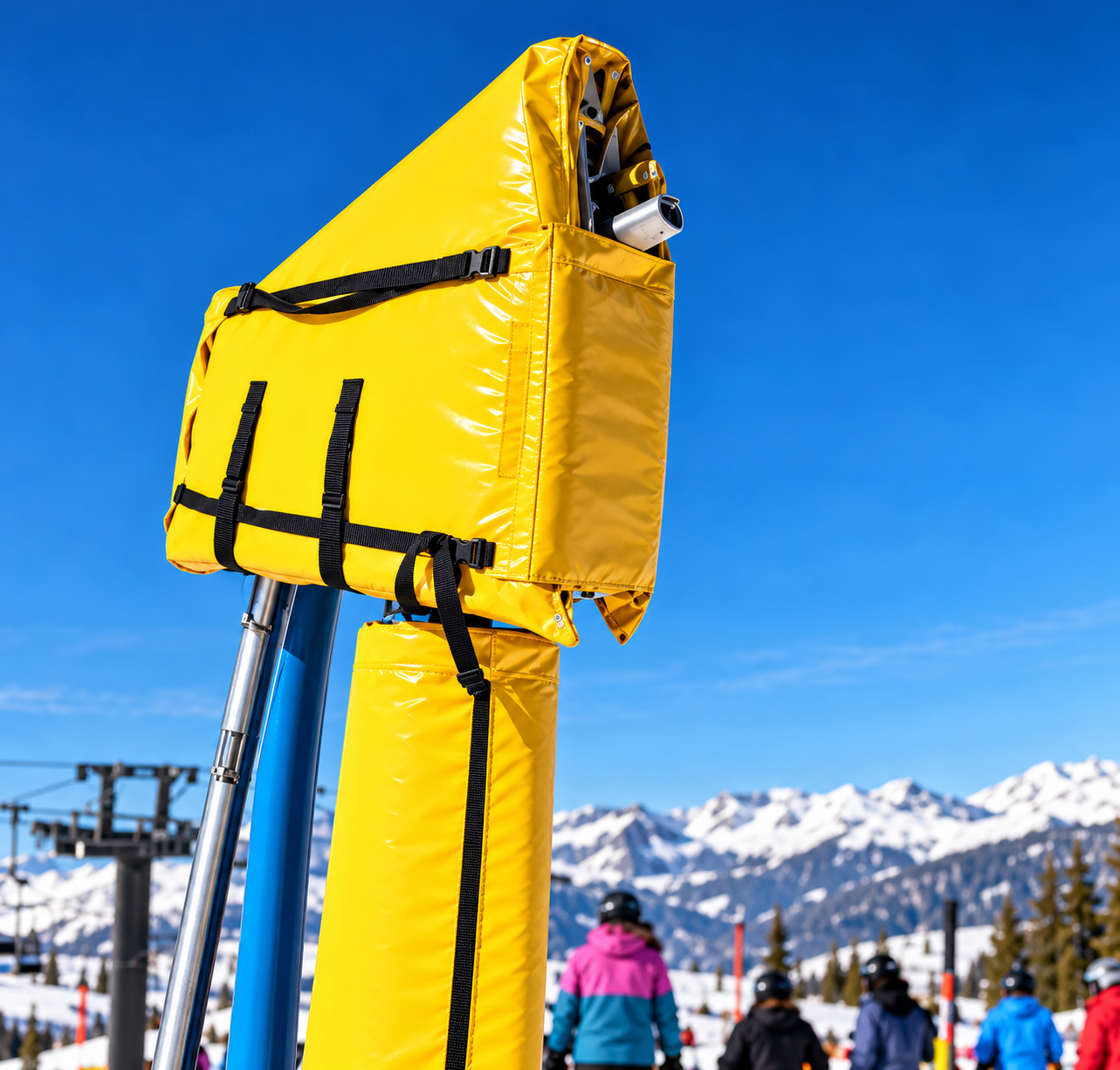
Pole padding often receives less attention than tower pads, but smaller posts and structures can create significant exposure on narrow trails, beginner areas, and terrain parks.
Inspect padding around:
Lift line poles.
Trail signs and signposts.
Snowmaking towers.
Fence posts and gates.
Terrain park features.
Timing equipment and race-course structures.
Utility posts and other fixed objects.
Look for the same signs of wear: tears, fading, brittle vinyl, separated seams, loose straps, and compressed foam.
Also evaluate whether the pad still fits the current application. A new signpost may have a different diameter. A terrain park feature may have been redesigned. A pad that worked around a round post may not fit an angled or square structure.
If it sticks out of the snow, we can pad it. Idaho Sewing for Sports builds custom foam padding for unusual dimensions, angles, shapes, and access requirements.
5. Decide Whether to Repair or Replace
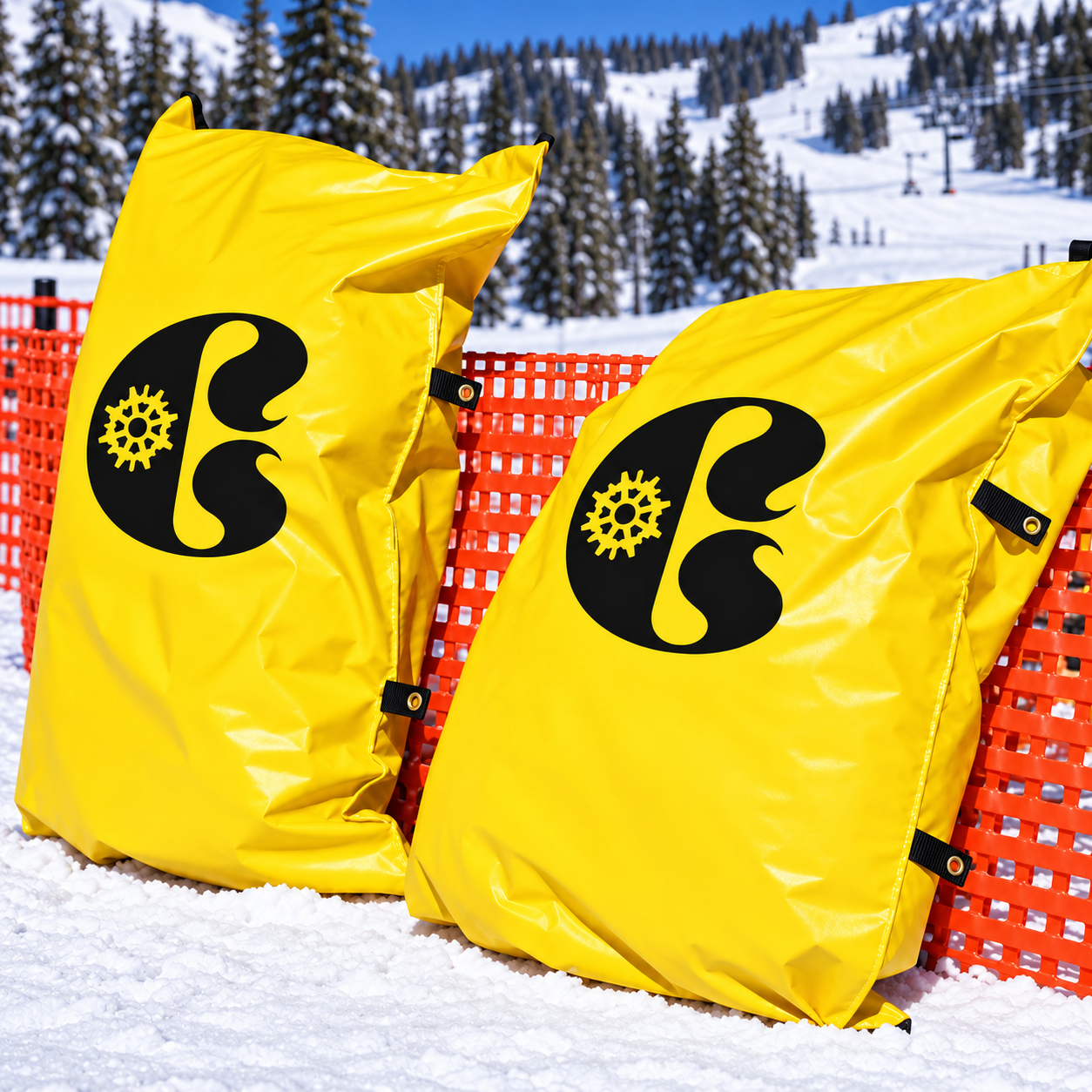
Use a practical decision process. Not every worn pad needs to be discarded, but not every damaged pad should be patched.
Repair or refurbish when:
The foam core remains resilient and correctly shaped.
Damage is limited to a small section of vinyl.
Seams can be restitched without compromising the cover.
Straps, buckles, or hook-and-loop closures can be replaced.
The pad still fits the structure correctly.
The cover is designed for replacement.
Replace when:
The foam is permanently compressed or deformed.
Tears expose a large area of foam.
The vinyl is brittle, cracked, or heavily chalked.
Multiple seams are separating.
Hardware cannot maintain tension.
The pad no longer fits the structure.
The pad has been repeatedly patched and is difficult to inspect.
The original material specifications are unknown or inadequate for the climate.
For many commercial systems, replacing the cover while retaining a serviceable foam core can extend useful life and reduce total ownership costs. If both the cover and core are compromised, replacement is the better choice.
Do not wait until opening day to order custom replacements. Idaho Sewing for Sports reports typical custom project lead times of approximately 3–6 weeks, depending on quantity and design complexity. Rush options may be available based on production capacity.
6. Verify Installation Before the First Snowfall
Install representative pads before winter conditions arrive. Check one tower pad, one hydrant pad, and one pole pad from each configuration.
During installation, verify:
The pad wraps completely around the structure.
There are no exposed corners or gaps.
Buckles and straps can be adjusted properly.
Closures remain closed after manual push-and-pull testing.
Access panels, handles, and operational controls remain available.
Padding does not obstruct inspections, switches, sensors, or required equipment access.
The installation matches your mountain operations plan.
Coordinate this work with annual lift inspections, tower maintenance, snowmaking system checks, and trail preparation. Padding should support those activities without hiding corrosion points, welds, fasteners, or mechanical components that require inspection.
Ski lift operations should continue to follow applicable requirements, including ANSI B77.1, manufacturer instructions, and internal inspection procedures. ASTM Committee F27 work related to ski area padding and operations is also developing. Your checklist should be updated as applicable industry guidance evolves.
7. Store Padding Correctly Between Seasons
Summer storage has a direct effect on pad life. Whenever possible, store pads indoors or under cover. Keep them off wet ground and away from standing water, chemicals, sharp objects, and prolonged direct sunlight.
Before storage:
Remove dirt, salt, and debris.
Allow pads to dry completely.
Inspect for damage while it is easy to access.
Tag marginal equipment for repair.
Record dimensions and locations.
Store pads where they will not be crushed or folded excessively.
A clean, dry, organized storage area makes the next preseason inspection faster and reduces the chance of installing damaged equipment by mistake.
Why Preseason Padding Checks Matter
Proactive maintenance is less expensive than mid-season downtime. Replacing one compromised tower pad during the summer is a controlled purchasing decision. Discovering the same problem during a holiday operating period can require emergency shipping, unplanned labor, trail closures, and lost capacity.
A reliable preseason checklist also helps reduce injury risk, limit equipment damage, support regulatory compliance, and demonstrate that your resort maintains a documented inspection process.
Idaho Sewing for Sports has manufactured ski area padding for more than five decades. Our heavy-duty UV-resistant vinyl and high-density closed-cell foam are built for demanding conditions. We also offer custom colors, logos, replaceable covers, and fully custom solutions for non-standard mountain equipment.
Review our ski area padding solutions or request a quote before the season begins.
Frequently Asked Questions
How often should ski area padding be inspected?
Inspect padding at the end of each season, during summer storage, and again before installation. Perform additional checks after severe storms, equipment impacts, major grooming work, or changes to trail layouts.
What are the most common signs that lift tower pads need replacement?
Look for brittle or cracked vinyl, severe UV fading and chalking, exposed or compressed foam, separated seams, damaged buckles, loose straps, and pads that no longer fit tightly around the tower.
Can a ski area replace only the cover?
Often, yes. If the foam core remains resilient and correctly shaped, a replacement cover may be a cost-effective option. The cover and foam should be evaluated together before deciding.
What materials are best for mountain conditions?
Look for heavy-duty UV-resistant vinyl, closed-cell high-density foam, reinforced seams, durable closures, and hardware suited to freeze-thaw cycles. Idaho Sewing for Sports tower pads are made with 18-ounce vinyl and are cold-crack rated to –40°F.
What is the typical lead time for custom foam padding?
Most custom projects are completed within approximately 3–6 weeks. Lead time depends on the quantity, dimensions, materials, branding, and design complexity. Contact the manufacturer early for current production timing.
Is bulk pricing available for ski resorts?
Yes. Bulk pricing is available for resorts ordering multiple tower pads, hydrant covers, pole pads, chairlift pads, or custom products. Request a quote with your quantities, dimensions, locations, and required delivery date.
How do we start a custom padding project?
Send photos, measurements, sketches, or equipment specifications through the custom projects page or contact Idaho Sewing for Sports. The design team can recommend materials, fit, attachment methods, thickness, and branding options for unusual applications
